We recommend professional drain cleaning at least once a year for most households. If you have a large family, older pipes or frequently experience slow drains, twice a year is a smart investment. Routine cleaning costs far less than dealing with a sudden backup, and it keeps your whole system flowing the way it should.
Why routine drain cleaning matters
Grease, soap scum, hair, food particles and mineral deposits collect inside your pipes gradually. Even when water still drains, that buildup narrows the pipe until a full blockage forms, often at the worst possible time, like during a holiday gathering or in the middle of the night.
- Prevents major blockages and backups
- Reduces odors caused by buildup
- Extends the life of your plumbing system
- Can reveal hidden issues like root intrusion or corroded pipe
What affects how often your home needs it
- Household size: more people means more hair, soap and food going down the drains
- Age of your plumbing: older cast-iron and galvanized pipes have rougher interiors that catch debris
- Trees near your sewer line: roots are drawn to moisture and can work into joints
- Kitchen habits: frequent cooking with oils and heavy garbage disposal use speed up buildup
- Past problems: if a drain has clogged before, it's likely to clog again without a thorough cleaning
Signs you shouldn't wait
- Slow drains in more than one fixture
- Gurgling sounds from drains or toilets
- Recurring clogs in the same spot
- Sewage-like odors
- Water backing up into a tub or floor drain
If several fixtures back up at once, or water comes up through a floor drain when you run the washer or flush a toilet, the blockage is likely in your main sewer line. Stop using water where you can and call a professional right away.
What professional drain cleaning involves
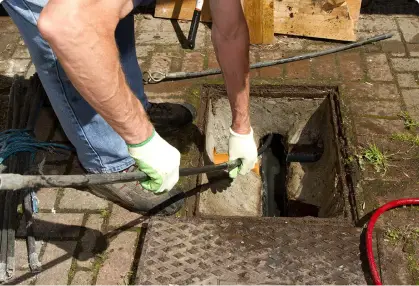
Rather than relying on harsh chemicals, a professional uses augers, hydro-jetting and, when needed, camera inspection to clear the line fully and check its condition. Augers break through and pull out clogs, hydro-jetting scours buildup from pipe walls with high-pressure water, and a camera shows exactly what's happening inside the line, so you get a lasting result instead of a temporary fix.
Keeping drains clear between cleanings
- Use drain screens in showers, tubs and kitchen sinks
- Scrape plates into the trash, and let grease cool and throw it away
- Run hot water for a minute after using the kitchen sink
- Avoid repeated use of chemical drain openers, which can damage pipes
- Only flush toilet paper and waste, never wipes, even "flushable" ones
Quick answers
Is chemical drain cleaner bad for pipes?
Repeated use of harsh chemical drain openers can damage pipes and often only clears part of a clog. Professional mechanical cleaning removes the blockage fully without harming your plumbing.
What is hydro-jetting?
Hydro-jetting uses high-pressure water to scour grease, scale and debris from the inside of pipes. It cleans the full diameter of the line rather than just punching a hole through a clog.
How do I know if my main sewer line is clogged?
Warning signs include several fixtures backing up at the same time, gurgling toilets and water rising through a floor drain when you use water elsewhere in the house.
Need a plumber in Cincinnati?
Licensed, insured and background-checked plumbers with upfront flat pricing and a 2-year labor warranty. Call us or book an appointment online.
Call (513) 903-1777